
The sound of a place: how a café is recognised by its sound
Hijaz and maqsum for the Egyptian café, Bayati with its quarter tone for the majlis, a real sense of place, and sounds timed to the motion.
Close your eyes in a café and you will know where you are from the sound alone: a checker snapping shut, dominoes knocking on marble, a glass set down on a saucer, someone laughing at the back. That sound is what makes a place a place, so we treat it as part of the game, not decoration.
Music from the place
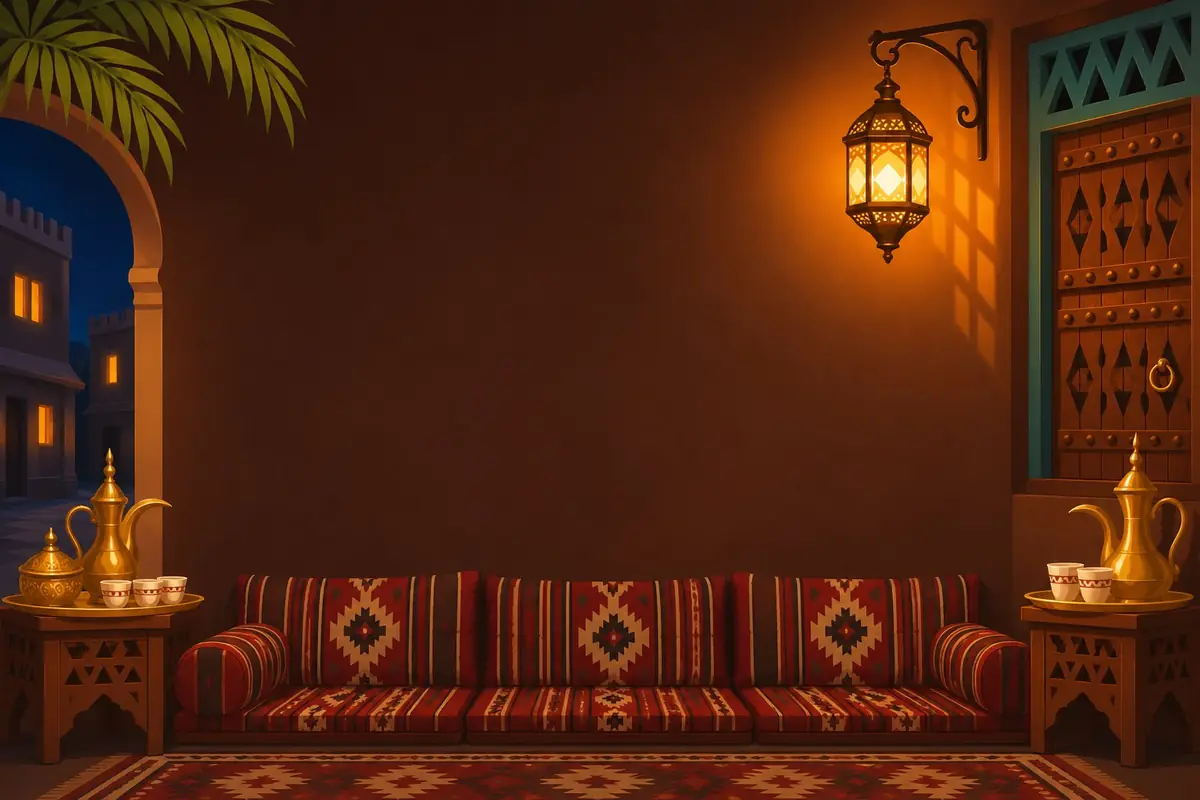
The Egyptian café has music in maqam Hijaz on a maqsum rhythm; the Gulf majlis has maqam Bayati, with the quarter tone no ordinary piano can play, and Gulf handclaps. The music loops without you noticing where it starts again, and it plays only on the home screen, so that playing time belongs to the game.
An atmosphere that breathes
Beneath the music sits the atmosphere of the place: a murmur of people, glasses, a light wind in the majlis. It is very quiet, so you hardly notice it, yet if it stops you feel something is missing. Players choose: music and atmosphere, atmosphere only, or silence.
Every sound timed to its motion
The rattle of the dice begins at the very moment they touch the table, not before, not after. A checker clicks when it settles; a drawn card sounds lighter than a played one. A hundred milliseconds between picture and sound makes motion feel like plastic, so we align them.
And silent when it should be
When the player locks the screen or switches to another app, every sound stops at once, and returns as it was when they come back. Respecting the place where the player is also belongs to sound design.
Nobody writes a review saying "the sound is nice". But many say "I felt like I was sitting in the café". That is the sentence we work for.